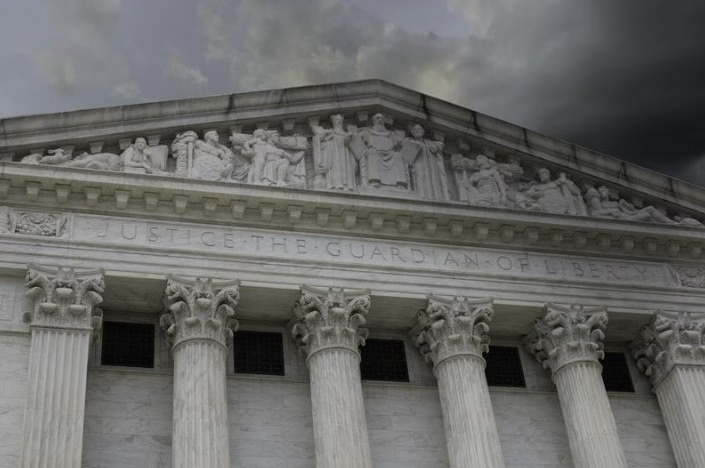
As the U.S. grapples with ongoing debates over trade policy and presidential authority, all eyes are on the Supreme Court for a pivotal ruling on President Donald Trump’s sweeping tariffs. Imposed under the International Emergency Economic Powers Act (IEEPA) of 1977, these tariffs have targeted major trading partners like China, Mexico, Canada, and others, aiming to address issues such as fentanyl trafficking and trade imbalances. The case, consolidated under titles like Learning Resources, Inc. v. Trump and Trump v. V.O.S. Selections, Inc., challenges whether the president overstepped his bounds by using emergency powers to enact what critics call a broad tax on imports.
Background on the Case
The tariffs in question were implemented by Trump upon his return to office in 2025, invoking IEEPA, a law designed for national emergencies involving foreign threats. This allowed the administration to slap duties on a wide range of goods, from electronics to commodities, without explicit congressional approval. Lower courts, including the Court of International Trade and the Federal Circuit, have ruled against the tariffs, declaring them invalid and even issuing injunctions (though some were stayed pending appeal). The Supreme Court heard oral arguments on November 5, 2025, where both conservative and liberal justices expressed skepticism about the breadth of executive power under IEEPA. At issue is whether regulating imports includes the authority to impose tariffs, and if such delegation from Congress violates constitutional principles like the nondelegation doctrine.
Trump has defended the tariffs as essential for national security and economic leverage, warning that striking them down would create a “complete mess” for U.S. trade and lead to economic disruption. The administration argues that tariffs are a lesser measure than outright import bans, which IEEPA explicitly allows.
Possible Implications of the Ruling
The decision could reshape U.S. trade policy, presidential powers, and the global economy. Here’s a breakdown of potential outcomes:
If the Tariffs Are Upheld:
- Strengthened Executive Authority: A win for the administration would affirm broad presidential discretion in foreign affairs and emergencies, potentially setting a precedent for future trade actions without congressional input.
- Economic Continuity: Tariffs would remain in place, continuing to influence supply chains. This could encourage domestic manufacturing but maintain higher costs for consumers and businesses reliant on imports.
- Market Stability: Commodities like gold might see sustained demand as a hedge against trade tensions, while sectors like logistics could adapt to ongoing restrictions.
- Global Relations: Trading partners might face prolonged duties, escalating tensions and prompting retaliatory measures.
If the Tariffs Are Struck Down:
- Refunds and Trade Shifts: Importers could seek billions in refunds through U.S. Customs, though not automatically—companies would need to file claims via systems like the new electronic refund portal (deadline extended to February 6, 2026). This might boost U.S. freight volumes, especially from high-tariff countries like China, as businesses broaden sourcing and place more orders ahead of events like Lunar New Year.
- Backup Plans: Trump has signaled alternative measures, such as imposing 10% across-the-board tariffs using other authorities to “make up most of the room.” Advisors like Kevin Hassett have emphasized finding ways to achieve similar outcomes, potentially mitigating immediate economic fallout.
- Broader Economic Ripples: A ruling against the tariffs could signal a check on executive overreach, but it might also lead to market volatility, supply chain reevaluations, and shifts in commodity markets. Trump has warned of a “terrible blow” to U.S. leverage in international negotiations.
- Constitutional Precedent: It would reinforce Congress’s role in taxation and trade, limiting future presidents’ unilateral actions and possibly inviting more legislative involvement in economic policy.
Regardless of the outcome, the ruling won’t address the wisdom of the tariffs themselves—only their legality. Experts anticipate a “mishmash” decision, possibly upholding parts while invalidating others.
When Is Decision Day?
The Supreme Court has indicated it will release rulings in argued cases on January 20, 2026, during a scheduled sitting. This follows several non-decision days in early January, building anticipation. With a 6-3 conservative majority, the outcome remains uncertain, but oral arguments suggested doubts across the ideological spectrum.
This case highlights the intersection of law, economics, and politics in a divided era. Businesses, investors, and policymakers should prepare for potential shifts. stay tuned for the ruling and its aftershocks.